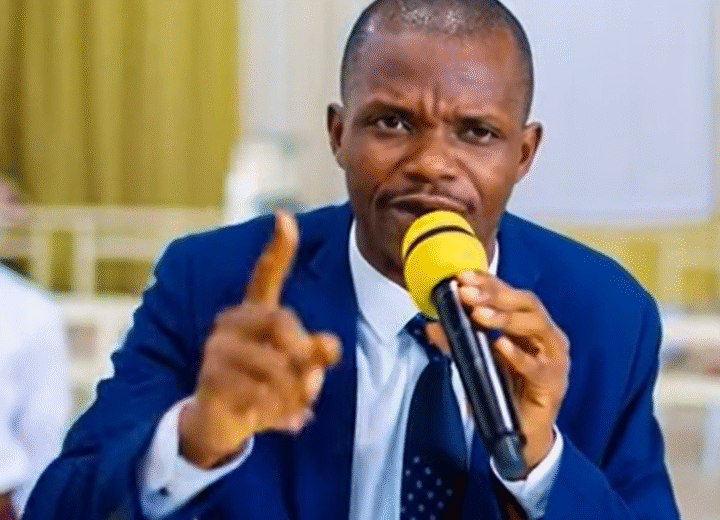
Gabriel Barau stands as a definitive figure in modern African missiology—a missionary statesman whose vision has transcended borders. He serves as the International Director of GO International Ministry and as the Chairman of the Africa Missions Association, a dream he once presented that is now a thriving reality. His influence is further cemented through his prior leadership as Chairman of the Nigeria Evangelical Missions Association (NEMA), on whose Board of Trustees he continues to serve, and through his written work, such as the book ‘Emerging Cloud.’
Yet, these titles and accomplishments are merely the landmarks of a journey that began not in boardrooms, but in the remote, untouched highlands of Nigeria. This is the story of a calling answered with unwavering courage and a lifetime spent turning vision into tangible hope.
Chapter 1: The Call to the Clouds
Gabriel Barau was born on April 2, 1958, into the Taroh tribe in Langtang South, Plateau State, Nigeria. His path took a definitive turn in 1983 when his church, the Redeemed Peoples Mission, mobilized its youth to reach unreached people groups. Though the church itself did not open a mission field, it pledged support to those who felt called to go. Gabriel felt that call with compelling clarity.
He made a series of radical, life-altering decisions that would define his future: resigning from a stable civil service position and, most strikingly, rejecting an offer of admission to the prestigious Nigeria Defence Academy. Instead of a military career, he chose a mission described by many at the time as a “suicide mission.” He joined the pioneering team bound for the Koma people, an isolated tribe dwelling in the Atlantika Mountains (then in Gongola State, now Adamawa State). In 1983, the Koma were a completely nude, animist society, untouched by outside civilization—a world unto itself, and Gabriel Barau’s new home.
Chapter 2: Building a Foundation, Expanding a Family
The initial work in Koma Hills was the forging ground for Barau’s philosophy and resilience. In 1989, he married, founding a family that would become his steadfast support system. He and his wife were blessed with four children: Jerry, Nanji, Susan, and Raphael. This personal foundation paralleled the growth of his ministerial vision. What began as his personal calling evolved into an organization—first known as Missionary Crusaders Ministry (MCM), now called GO International Ministry.
Chapter 3: The Map of a Mission
From the seminal Koma field, the work expanded, driven by a strategic focus on groups without the gospel. The chronology of fields reads as a map of diligent, faith-driven expansion:
- 1989: Verre field, Adamawa State.
- 1992: Minda field, Taraba State.
- 1994: Kona Jukun field, Taraba State.
- 1996: Jibu and Dirim fields, Taraba State.
- 1997: Mumuye field, Taraba State.
- 2004: Fulani field (Taraba) and Kadara field (Kaduna State).
- 2006: Hausa field (Kano State) and Kamberi field (Niger State).
- 2007: Kandawa field, Kebbi State.
- 2012-2013: Bassa Field (FCT), Gbagyi field (FCT), Bankalawa field (Bauchi State).
- 2016: Yoruba field, Kwara State.
The vision then leaped beyond national borders to Cameroon, Chad, and Bangladesh, where work among Muslim communities began in 2003.
Chapter 4: Multiplication and Leadership
Barau’s philosophy extended beyond personal church planting. Understanding the need for sustainability and multiplication, he founded the School of Mission in Yola twenty-one years ago. This institution has trained over 250 cross-cultural missionaries from diverse nations including Niger, Chad, Togo, Cameroon, Afghanistan, Senegal, Liberia, Congo, and Bangladesh.
His leadership, honed on the field, was recognized at the highest levels. He served a six-year term as National Chairman of the Nigeria Evangelical Missions Association (NEMA) and now chairs the Africa Missions Association (AFMA), fulfilling a dream he championed on the global stage.
Chapter 5: A Holistic Mandate in a Changing World
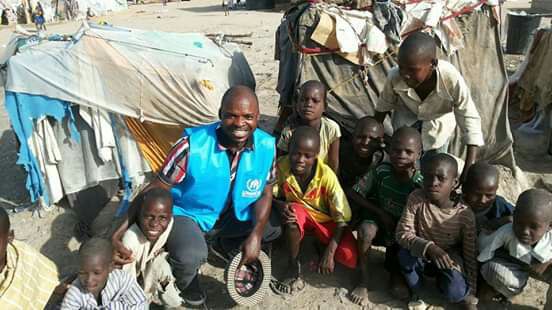
The work of GO International is described as “sundry,” and indeed it is holistic. Each field involves reaching communities, planting churches, discipleship, and humanitarian work. This holistic approach has adapted to Nigeria’s contemporary challenges. A significant portion of energy and resources is now dedicated to serving Internally Displaced Persons (IDPs), providing food, sanitary materials, clothing, and spiritual care. This includes specialized ministries like providing Bibles, relocating Muslim converts for safety, and running convert care camps for discipleship.
Conclusion: The Unfolding Legacy
From a single, daring step into the Koma hills in 1983, Gabriel Barau’s legacy has unfolded across the Nigerian landscape and into Africa and Asia. Today, GO International oversees 161 missionaries. Personally, Barau has planted more than 34 rural churches in Nigeria. The narrative of his life is one of a calling answered with total commitment, strategic expansion, dedicated multiplication of workers, and compassionate adaptation. It is the story of a man who looked at the map of the unreached and dedicated his life to ensuring that no people group, however remote or challenging, remained without a witness. The mission continues, and he remains steadfastly out for it
QUESTION 1
I really appreciate your consistent devotion over the years. My question is this: have there been cases of life risk or even martyrdom among your missionaries owing to the fact that you are working in a hostile environment?
RESPONSE 1
There is no mission enterprise without risk. We have lost several men. Even now, one of our missionaries has been missing for 5 years. There are many more challenges, such as attacks on missionaries and even displacements. Presently, 14 of our missionaries were displaced by Fulani herdsmen and are taking refuge in our school of mission.
QUESTION 2
Secondly, how have you been able to manage such situations?
RESPONSE 2
The only way to manage a critical situation in the mission field is the driving force. What is the driving force in mission? It is the vision and calling. It helps us not to run, not to deviate, and not to do our own things.
QUESTION 3
Please sir, regarding your mission endeavor to the Koma people, did you go alone or with a team?
RESPONSE 3
First, the church I attended discovered the people and shared with the youth in 1982. I had the call to go, and two others who equally resigned from their jobs as I did. One died on arrival, leaving two of us. One left, leaving me alone.
QUESTION 4
What has been your driving passion for missions, that is, cross-cultural missions?
RESPONSE 4
Just the calling. Seeing converts from hard ground gave me joy and makes me move further.
QUESTION 5
What are some of the practical personal practices you have undertaken to keep you focused through the years?
RESPONSE 5
Not looking back. High concentration on what God has called you to.
QUESTION 6
Sir, you talked about relocating Muslim converts. Can you please explain more on how this can be done?
RESPONSE 6
You don’t keep Muslim converts where they are converted. They will kill them, so we relocate them to a hidden place.
QUESTION 7
Sir, I noticed that you started your story from when you were called into the mission field and how you abandoned so many things to be found in the mission field. I always have this belief that until you are called or sent, there will be no compelling fire in you to succeed in your field. So my question is: how can we know we are called or sent, particularly into the mission field, or is it a personal decision?
RESPONSE 7
You are correct. If you are not called, you can do less.
QUESTION 8
For missionaries that are totally shut out in extremely rural communities where there are no communication links, please, do you support or reach out to them?
RESPONSE 8
All we do is faith mission. No salaries, no support. However, we share with people who believe in that which we do, and they support individual missionaries. Every missionary is encouraged to raise their support also.