

by Emmanuel Attih
Prologue: A Necessary Reorientation
It is with solemn joy that I accept the charge to redirect our missiological searchlight toward the hinterlands: those spaces often shrouded in the shadow of urban-centric evangelism. In our contemporary zeal, mission emphasis has frequently been polarized: projected either transcontinentally or concentrated within dense urban populations. We stand at a curious juncture in history: though many of us are inheritors of a rural patrimony, we have pursued urban evangelization with such vigor that we have, in practice, abandoned the local fields : the villages, the farmsteads, the fishing settlements. Yet in the divine economy, one field is not meant to supplant another; each holds its unique place in the tapestry of redemption.
The Conceptual Terrain: What Constitutes “Rural”?
A rural community may be understood as an open expanse of land characterized by a low density of human habitation and structures. It exists largely free from the complex symphonies and dissonances of modern urban life, yet it is often paradoxically deprived of the advantages such complexity affords. These are regions marked by higher indices of poverty, illiteracy, constrained economic prospects, and underdevelopment. The countryside, the agrarian village, the littoral fishing settlement these are the archetypes of the rural.
Tonight, our collective inquiry is fixed upon the condition of mission work within these non-urban spaces to assess: its progress, diagnose its impediments, and re-imagine its potential.
- The Challenges: A Diagnostic of Resistance
Missions, in any context, is an undertaking fraught with spiritual and existential challenge. While the obstacles herein described may also touch urban endeavors, they manifest with particular acuity in rural settings, demanding our focused engagement.
- The Haphazard Implementation of the Great Commission
Matthew 28:18–20
Christ, the perfect expositor of divine intention, delineated the Great Commission as a holistic mandate: a power-impelled movement encompassing proclamation, baptism, and diligent discipleship aimed at obedience to all His commands. The challenge in rural communities is often not that they are unreached, but that the fullness of the Gospel has not reached them. It is one matter for missionaries to arrive at a geographical location; it is another for the transformative truth of Christ to permeate the soul of a people.
Historical precedent warns us: the 15th-century European missionary incursion into Africa is often debated for its theological purity. As Paul acknowledged from his Philippian prison, motives may be mixed, yet Christ is preached (Philippians 1:15–18). My own research and engagement reveal that many in rural communities possess only a superficial familiarity with practical biblical living. Thus, our task is not merely to spread the Gospel, but to plant biblical churches and appoint qualified shepherds to ensure the Commission’s complete fulfillment. Many Nigerian rural communities have been worked upon, yet their present spiritual poverty calls for a re-working: a return to first principles.
- The Imbalance of Mission Mobilization
Acts 1:8
It is a peculiar paradox that in missions alone does it seem commendable to neglect one’s own household while undertaking grand works abroad. Many invoke the apostle Paul’s ministry to the Gentiles as justification for domestic indifference. Yet we must remember: Paul was specifically set apart for the Gentile mission (Acts 9:15). To balance this, God had already commissioned Peter for the local fields. Paul himself did not commence his ministry without first endeavoring to reach his own people (Acts 9:20–22), nor did he conclude it without a fierce defense of the Gospel on his native soil (Acts 21–22).
Therefore, while not a rigid law, it should be seen as a crucial, even unavoidable, responsibility for believers especially aspiring missionaries to ensure their own villages and localities are effectively evangelized and discipled. Our mission zeal ought first to be tested at home, to ascertain if what we carry is indeed “export-worthy.” Mobilization becomes a blessed endeavor when it follows a systematic order: if we can plan for transborder missions across a year, why can we not, with similar intentionality, dispatch mission bands to neighboring villages monthly? The darkness is near; our response must be proportionate.
- The Failure of the Local Church
Matthew 16:18
By “local church,” I refer not to a single denomination, but to the collective body of Christ within a rural territory. Some prefer to discuss missions apart from ecclesiology, but I align with thinkers like Paul Washer: biblical missions involves a biblical church sending qualified personnel to plant biblical churches.
Christianity is, in its earthly expression, an institutionalized faith. Missions cannot stray too far from the local church. If it does not originate with her, it must ultimately be sustained and consummated by her. Yet tragically, the rural churches charged with consolidating the fruits of mission in their own lands have often failed. They have failed to train disciples, to evangelize their neighbors, to hold back the encroachment of Satanic influence.
Today, animism, occult practices, and demonic cultural strongholds thrive in rural areas as if the Gospel had never come. This places a responsibility upon urban churches, missionaries, and agencies to labor and pray for the revivification of these rural congregations. Sending inexperienced pastors to rural posts, harvesting emerging rural leaders for city ministries, and financially exploiting rural churches for urban projects these are practices that undermine the missional foundation. Strengthening the local church to advance and sustain the Gospel must become a paramount concern.
- Underdevelopment and the Rural–Urban Migration
Philippians 2:21
Rural communities lack the amenities that make urban life attractive, precipitating a mass exodus to cities. By 2007, half the world’s population lived in urban centers, a trend that continues. This migration evacuates spiritual and human capital from rural areas, leaving the fields “white unto harvest” but scarce of laborers.
Missionaries must be willing to follow Christ’s example of intentional kenosis: self-emptying. We must accept the humble conditions of rural life, whether serving full-time or through strategic part-time engagements. At the very least, urban believers could plan periodic “mission holidays” in their villages, using those intervals for evangelism and church-strengthening work.
- Illiteracy and the Need for Contextualization
Hosea 4:6
A significant portion of rural dwellers are not academically educated. They are “natural people,” which makes ministry a mountaineering task for the unskilled. Effective rural mission demands adaptability, flexibility, and a willingness to descend from the heights of one’s own educational or cultural vantage to meet people where they are. Our training conferences must equip workers with the “dos and don’ts” of rural engagement. The advantage of proximity: shared language and cultural intuition is a gift we must not squander. We need not extensive cross-cultural training to reach villages that lie at our very doorsteps.
- Stiff Satanic Resistance
1 Thessalonians 2:18
Evangelism remains an offensive against the kingdom of darkness. Satan will respond with aggression, especially in rural strongholds where ancient altars and territorial spirits are deeply entrenched. Taking the Gospel to these areas is akin to besieging the enemy’s own citadel.
Therefore, rural mission must be underpinned by profound, concerted prayer. We must put on the whole armor of God (Ephesians 6:10–18). Any mission venture must be preceded, accompanied, and followed by sustained spiritual warfare. We must also be discerning, sending believers with unsound testimonies into such battles can prove disastrous.
Difficult Terrain merits mention as a practical challenge. Geography itself can be a formidable barrier. I recall a crossing to a fishing settlement near Ibaka where my team was trapped in muddy estuaries for over three hours by night, with no adequate shelter upon arrival. Such hardships test resolve, yet they also partake in the “fellowship of [Christ’s] sufferings” (Philippians 3:10). The joy is that souls were won, a church was planted, and the kingdom advanced.
2. The Opportunities: A Vision of Fertile Ground
Amidst the challenges, divine providence has sown unique opportunities within rural soil.
(a) Communal Living
The close-knit, relational fabric of village life facilitates rapid, door-to-door evangelism. A new convert can naturally bring neighbors to faith with minimal obstacle: the social structure itself becomes a conduit for the Gospel.
(b) Receptivity and Hospitality
Rural communities often exhibit a warmth and openness to ministers of the Gospel seldom found in cynical urban settings. This receptivity should embolden us to enter these fields with confidence and compassion.
(c) The Advantage of Specialized Ministry
The social segmentation of rural settings creates avenues for targeted ministry: to children, youth, the aged, the sick. Specialized approaches:medical outreach, educational programs, care for the elderly:can reach souls impervious to conventional proclamation. If you are called to a specific ministry niche, the rural field awaits you.
The children playing in the sand need a patient teacher.
The expectant mother needs a godly midwife.
The youth need a guide who can bridge their world to the Man of Calvary.
The aged need a hand to hold as they approach eternity’s threshold.
Will you be that worker?
(d) Rural Communities as Training Grounds
While not an absolute rule, rural missions provide an invaluable practicum for aspiring cross-cultural workers. The lessons learned in local missions:adaptability, perseverance, spiritual warfare:form an essential foundation for future service to the “uttermost parts.”
3. The Paradigm: Christ, The Rugged Rural Missionary-Saviour
Matthew 9:35
Our Lord’s earthly ministry was beautifully balanced: “He went about all the cities and villages.” The servant is not greater than his master. To enter rural fields may feel like diminishing our prospects, localizing our gifts, or embracing a life of hardship. Yet we are called precisely to this: “For to this you have been called, because Christ also suffered for you, leaving you an example, so that you might follow in his steps” (1 Peter 2:21).
His steps led to the most interior places:to the forgotten, the marginalized, and ultimately to Calvary. Today, the mandate falls to us. God will not bless us merely for going; He will assess our faithfulness in doing. His welcome is for the “good and faithful servant,” and His measure of faithfulness often concerns the “little things” (Matthew 25:21; Luke 16:10–12).
What, then, is the temperature of your zeal for the rural field? The apostle Paul was willing to be “accursed” for his kinsmen (Romans 9:3). If the Pharisees of Christ’s day could “travel over land and sea” to make a single convert (Matthew 23:15), how much more should we, bearers of eternal life?
The Lord’s grand strategy is declared in Jeremiah 16:16: “I will send for many fishers… and after that I will send for many hunters.” Many rural communities are like fields partially harvested but not gleaned, for their “Ruth” has her eyes on distant lands. Churches were planted by “Pauls,” but now languish for want of “Apollos” to water them (1 Corinthians 3:6).
Today, the Lord seeks to re-commission an army for the rural harvest. The question echoing from the throne is, “Whom shall I send?” Our answer must be, “Here I am, Lord. Send me.”
Selah.
Q & A:
Question: Given these challenges, what remedial measures would you propose?
Answer: Gratitude for your inquiry. Within the analysis of each challenge lies the seed of its solution. The path forward requires personal adjustment and the persuasion of church and mission leaders toward institutional realignment. With God as our ally, victory is assured the triumphant end of the missional enterprise is already foretold in Scripture. Our choice is to avail ourselves of the golden opportunity to participate or to risk being sidelined by the forward march of divine purpose. The persistent failure of discipleship in previously evangelized areas haunts the global church, evident in the re-missionization of regions like Europe, where Christianity is often blended with secular or pagan traditions. In our rural fields, a dangerous syncretism prevails, where church elders may also be initiates of secret cults like Ekpe. Our remedy must be a return to robust, biblical ecclesiology and discipleship, empowered by prayer and sustained by love. May God help us to be faithful stewards of the mysteries entrusted to us.
Emmanuel Attih
I, Emmanuel Attih, shall attain to the age of twenty-nine on the fifth day of December in this year of our Lord. By academic formation, I am a diplomat, having been conferred with a Bachelor of Arts in History and International Studies, Second Class Upper Division, from Akwa Ibom State University. The mandate of national service I rendered in Ogun State between the years 2018 and 2019.
In the year 2010, divine grace intersected my earthly journey, and I encountered the Lord in a profoundly personal revelation. Since that moment of spiritual awakening, I have offered myself in continuous service within the body of Christ, specifically within the Deeper Life Bible Church. My stewardship has unfolded through successive offices:
At present, I serve as an Regional Coordinator for the Deeper Life School Outreach in the Oron Region, Akwa Ibom State, Nigeria, while simultaneously undertaking a two-year programme of theological studies at the International Bible Training College, Port Harcourt, an affiliate of Anchor University, Lagos.
My commitment to the missio Dei found tangible expression in 2018 through the co-establishment, by divine orchestration, of Reach the World for Christ Advocacy (REWCA), also known as Arab Missions. This initiative has since convened multiple mission conferences and cultivated partnerships, including with Campus Momentum. We sustain a rhythm of mission mobilization:both digital and terrestrial:underpinned by a dedicated Mission Prayer Team that intercedes twice monthly and gathers weekly in virtual solemn assembly.
By God’s enabling, REWCA has undertaken local mission expeditions to:
- Itu Mbon Usor, Ikono LGA (2019)
- Asiak Obufa Fishing Settlement, Ibaka (November 2019)
- Ikot Udo-Idem Redemptive Campaign, Mkpat Enin LGA (2020)
- Ikot Osom Grace Explosion Campaign, Abak LGA (2020)
- Ikot Etie-Idung Fishing Island, Mbo LGA (October 2020)
These forays have yielded a harvest of souls, the resuscitation of dormant congregations, the planting of a new church, and manifold miracles, all to the glory of Almighty God.
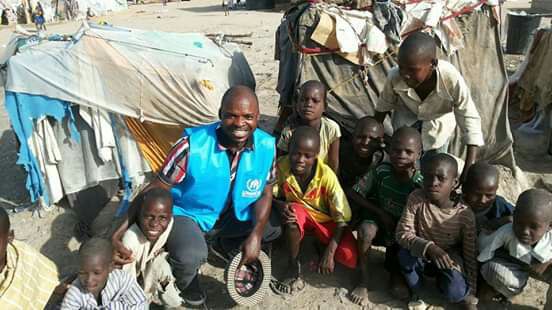

Working in our newest communities and villages first, to ensure that the gospel.we have is export worthy ….hmmm
A striking thought there, God bless you sir.